
How to Grow a New Website’s Traffic Using SEO and AI
Learn how keyword research, competitor analysis, and AI-assisted content creation can help a new website grow traffic with a simple SEO content process.

Getting traffic to a brand-new website is not easy. In the beginning, it can feel like you are doing many things but not getting enough results. You may publish articles, check Google Analytics, and still see only a small number of visitors.
This is normal.
SEO is not a simple thing that gives results overnight. It takes time, testing, planning, and consistent work. Sometimes the first few weeks or even the first few months can feel slow. But when the process is done correctly, a new website can slowly grow from very low traffic to thousands of visitors per month.
The main idea is simple to understand, but it takes time to apply properly: choose the right keywords, study what is already ranking, create useful content, and publish consistently. A practical SEO process usually includes keyword research, competitor analysis, content outlines, AI-assisted writing, editing, and regular publishing. When these steps are followed together, a new website gets a better chance to rank on Google.
How Can Easy Keywords Help?
The first step is to find keywords that are easier to rank for.
A new website usually does not have strong authority. Because of that, it is difficult to rank for highly competitive keywords at the beginning. Instead of targeting big keywords, it is better to start with specific keywords that are easier and more realistic. For example, a new website may struggle to rank for a broad keyword like “SEO tips.” But it may have a better chance with a more specific keyword like “SEO tips for new websites.”
This type of keyword is better for beginners because it is more focused. It also helps attract visitors who are searching for a clear answer. Tools like Semrush can help you find keyword ideas, search volume, and keyword difficulty. But the goal is not always to choose the keyword with the highest search volume. The better goal is to choose a keyword your website can realistically compete for.
Quick checklist for keyword selection:
-
Choose lower competition keywords
-
Make sure the search intent is clear
-
Focus on specific audience needs
-
Select topics that can become useful blog posts
Why Should You Study Ranking Pages?
After choosing a keyword, the next step is to search it on Google and study the top-ranking pages. This step is very important because the pages already ranking on Google show what kind of content Google trusts for that topic. Open the top three articles and look at how they are written.
Check their headings, subheadings, examples, structure, and the questions they answer. This does not mean copying their content. It means understanding what readers expect when they search for that keyword. Once you understand what is already working, it becomes easier to create a better and more helpful article.
Google’s People Also Ask section is also useful. These questions show what beginners usually want to know. Adding answers to these questions can make your article more complete and helpful. When you study ranking pages properly, you do not write blindly. You write with a better understanding of the topic, the reader, and the search intent.
How Can You Build Strong Outlines?
A strong article needs a strong outline.
Without an outline, the content can become messy, repeated, or difficult to follow. This is especially important for beginners because a clear structure helps them understand the topic step by step. Start by listing the main sections your article should include. The article should move naturally from the problem to the solution. For example, an article about growing website traffic can include sections about keyword research, competitor analysis, content planning, AI writing, editing, and consistent publishing.
This gives the article a smooth flow. It also makes writing easier because you already know what each section should explain. You can use top-ranking pages for inspiration, but your outline should not be a direct copy. Add your own explanations, examples, and beginner-friendly points.
Simple article flow:
-
Problem introduction
-
Clear SEO process
-
Step-by-step explanation
-
Useful examples
-
Practical final takeaway
A good outline saves time later. It also helps avoid repeating the same idea again and again.
How Should AI Support Content Creation?
Once the outline is ready, AI tools like ChatGPT can help create the first draft. This is useful when you need to publish content regularly. AI can save time and help turn your outline into a complete article faster. But AI should not be the final step. The first draft still needs human editing. You need to check the accuracy, improve the flow, remove repeated points, and make the article sound natural. This is where the real quality work happens.
AI can help you move faster, but human review makes the content useful and trustworthy. For better results, give AI clear instructions. Share the keyword, target audience, article outline, and important notes from the top-ranking pages. This helps the draft stay focused instead of becoming too general.
Content quality reminder:
Use AI to create the first draft, but always review and improve the final article before publishing. This helps keep the content simple, accurate, and useful for beginners.
Why Does Consistent Publishing Matter?
One blog post is usually not enough to grow a new website.
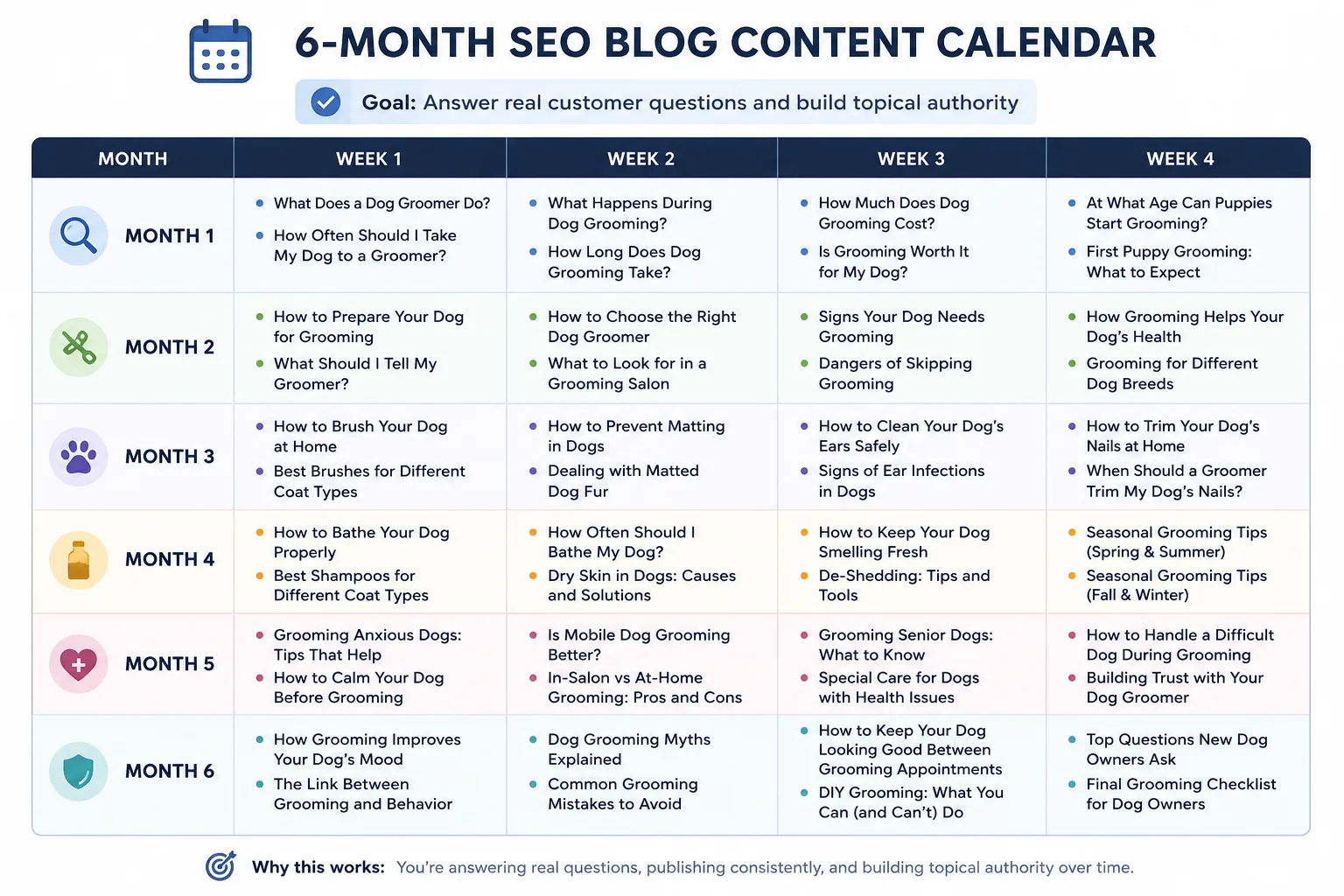
SEO works better when you publish useful content consistently over a longer period. At the beginning, traffic may be very low. But as more helpful articles are published, the website slowly builds a stronger content base. This is where many beginners lose patience. SEO takes time. It is not just about publishing one or two articles and expecting quick results. It may take months before you start seeing steady growth. Publishing two articles per week can help build momentum. Over six months, this creates many pages for Google to crawl, understand, and rank. But consistency alone is not enough. Each article should answer a real question and match what people are searching for. Publishing regularly only works when the content is useful and relevant.
 ## What Should You Remember About SEO?
Growing a new website with SEO is not about quick tricks. It is a long-term process that needs patience, research, writing, editing, and consistency. The steps may sound simple, but getting real results takes time and effort. Start with easy-to-rank keywords. Study the pages that already rank. Build a clear outline before writing. Use AI to speed up the first draft, but always improve the article yourself before publishing. In the beginning, SEO may feel slow. But when useful content is published consistently, traffic can grow over time. The key is to answer real questions, write for beginners, and create content that matches what people are already searching for.