Learn what makes content more citable in AI search, from first-hand experience and clear answers to credible evidence, technical SEO, and useful structure.
Enlear Team
August 5, 2026
5 min read
[ ]
AI Search
What Makes Content Worth Citing in AI Search?
Enlear
A page can rank in traditional search and still remain absent from AI-generated answers. The difference is rarely caused by keyword density or article length alone. Content gains stronger AI search visibility when it provides clear, original, and verifiable information that directly answers a specific question.
Traditional SEO still matters because AI search relies on discoverable and indexed web content. Google’s guidance for generative AI search confirms that existing search quality and ranking systems remain part of the process. The content must first be accessible, then useful enough to support an answer.
Why Does First-Hand Experience Matter?
Generic content often repeats definitions and recommendations already available across many websites. It may be accurate, but it gives an AI system little reason to select that page over another source. Real implementation details, technical trade-offs, mistakes, and practical examples make the content more distinctive.
This is especially important in developer and B2B content. A general article may recommend monitoring an application, while an experienced explanation identifies which signals matter, where common monitoring gaps appear, and how those gaps affect incident response. The second version provides information that cannot be created through basic research alone.
Google describes this type of material as unique or non-commodity content. Its guidance gives more value to first-hand perspectives, expert explanations, and original information than pages that simply summarize existing sources. Experience can be shown through examples and decision-making without repeatedly using personal pronouns.
What Makes Content Easier to Cite?
An analysis of 9.5 million AI citations identified several patterns in frequently cited B2B content. Clear headings, lists, named companies or tools, and numerical data appeared regularly in the most referenced long-form articles. These findings should be treated as useful signals rather than guaranteed AI ranking factors.
Content becomes easier to cite when the main answer is clear and supported. Helpful structure allows readers and retrieval systems to identify the most relevant section without searching through vague introductions or promotional language. The information itself must still be original, accurate, and useful.
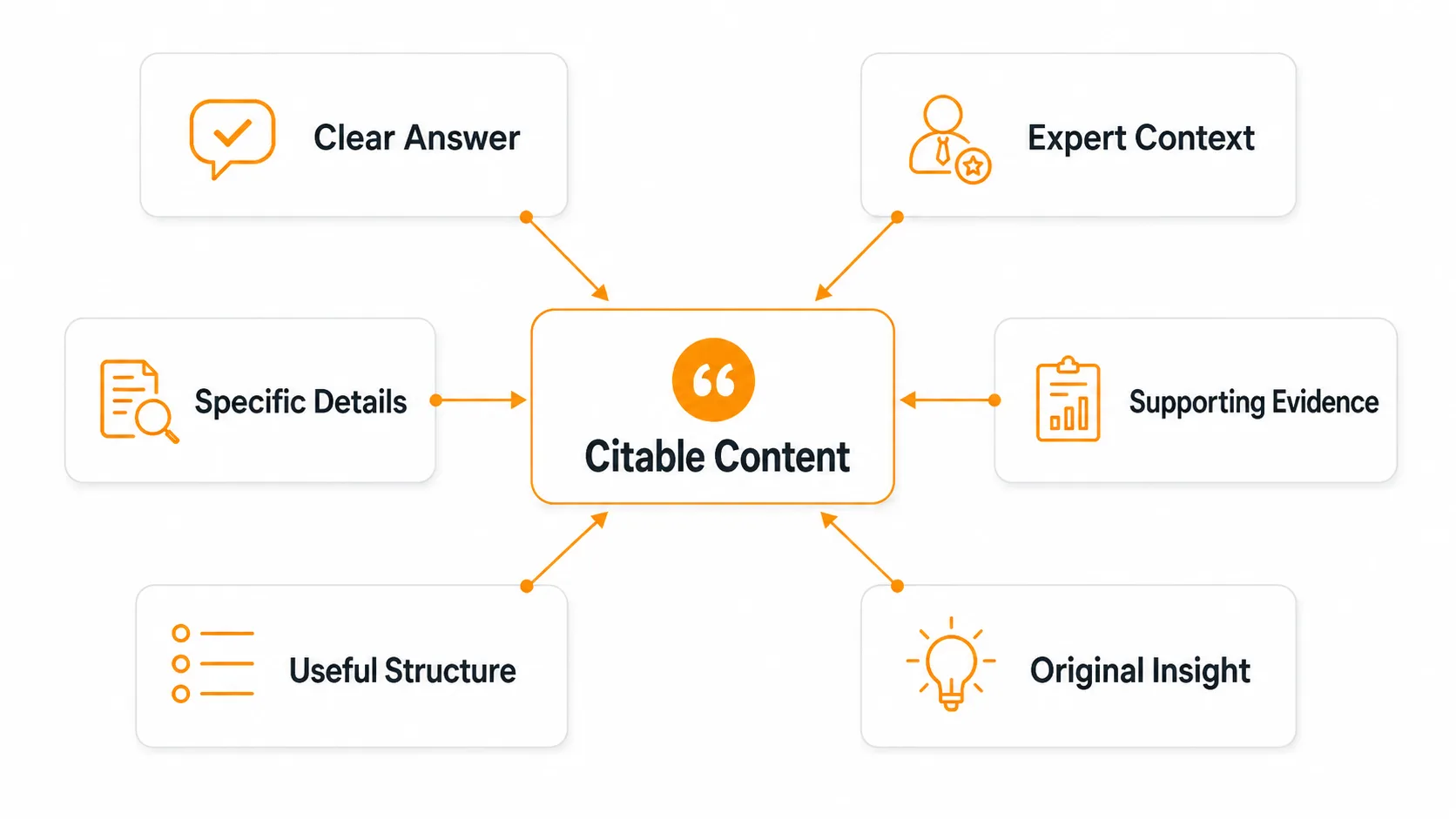
The most important elements include:
A direct answer to a clear question
Descriptive headings and logical sections
Real examples and expert context
Named tools, technologies, or methods
Credible evidence supporting important claims
Limitations, trade-offs, and practical detail
What Makes Content Easier to Cite in AI Search
Why Do Specific Answers Perform Better?
Broad statements such as “AI is changing development” or “security is important” provide little value because they do not explain what changed or what action should follow. Specific content defines the problem, the affected workflow, and the decision the reader needs to make. It also gives AI systems a clearer passage to reference.
An article about API security becomes more useful when it discusses service identities, token exposure, permission scope, credential rotation, and authentication failures. Each section answers a smaller but meaningful question within the wider topic. This creates several opportunities for the page to support a generated response.
Evidence should also support the exact claim beside it. Official documentation, research, standards, benchmarks, and original data provide stronger authority than unrelated links added at the end of a paragraph. The source should strengthen the explanation rather than simply make the article appear researched.
Do Structure and Freshness Matter?
Clear structure helps both readers and AI systems find relevant information, but every page does not need to be divided into unusually small sections. Google’s guidance states that content does not need special AI-focused formatting or artificial chunking. Headings and sections should follow the complexity of the subject.
Freshness matters most for rapidly changing topics such as AI tools, software products, security guidance, pricing, and regulations. Within the citation research, original and recently published content appeared frequently, but changing a publication date alone does not improve value. A real update should verify facts, replace outdated examples, and revise recommendations when the subject changes.
Why Does Technical SEO Still Matter?
Strong content cannot be selected when a page is difficult to crawl, index, or understand. Important information should remain accessible as readable page text, and the site should use clear internal links, sensible architecture, and accurate structured data. These are established SEO practices rather than separate tactics created only for AI search.
Google confirms that no special schema or technical file guarantees inclusion in AI-generated answers. Technical SEO creates access, while content quality influences whether the page is useful enough to reference. Both are necessary, but neither can replace the other.
How Can Businesses Create More Citable Content?
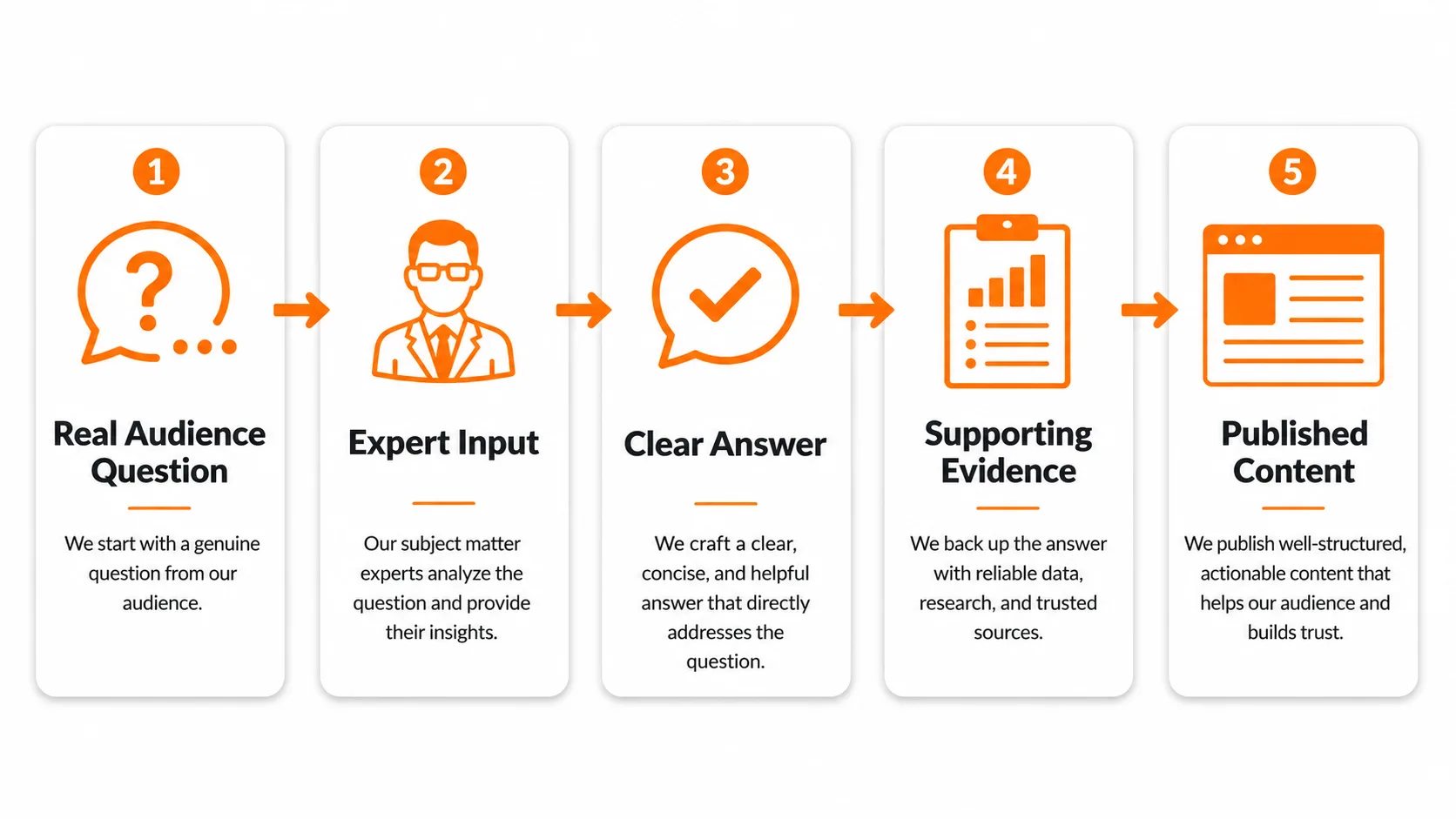
The strongest content ideas often already exist inside engineering, product, support, sales, and consulting teams. Repeated customer questions, implementation problems, technical reviews, and rejected approaches contain information that generic research cannot provide. The content process should capture that knowledge before writing begins.
Start with a real audience question and collect input from someone who has worked directly with the problem. Ask for examples, limitations, mistakes, trade-offs, and decision criteria, then build each section around a clear answer. During review, remove unsupported claims and confirm that every source directly supports the statement linked to it.
Turning Internal Experience Into Citable Content
Final Thoughts
AI search visibility is not created by repeating keywords or producing more generic content. Pages become more citable when they provide direct answers, original expertise, credible evidence, and enough technical detail to support a decision. Traditional SEO still makes the page discoverable, but experience and clarity give AI systems a reason to select it.
The strongest approach is to turn real organizational knowledge into focused resources that cannot be easily replaced. This improves the value of the content for readers while also increasing its potential to appear as a trusted source in AI-generated answers.
Based on our experience working with SEO in 2026, this article explains how AI Overviews changed the way we approach rankings, keywords, content research, expert input, and traffic. It shares the practical lessons that pushed us toward more experience-led, useful content while keeping traditional SEO foundations in place.
Learn how answering real customer questions on your website can help Google understand your expertise. This simple SEO method can support better rankings over time.
Google expanded AI Overviews and introduced AI Mode, which changed how people interact with search. Instead of typing a short keyword and clicking through multiple websites, users could ask longer, more detailed questions and get an AI-generated answer at the top of the page.
 Enlear