Introduction
As AI continues to evolve, it’s tempting to believe it can take over large parts of the marketing workflow from content generation to keyword strategy, audience segmentation, and even performance tracking. And in many areas, it delivers real efficiency gains. But when it comes to marketing to developers, humans are still at the heart of what works.
Why? Because developers have a low tolerance for fluff, filler, or content that just scratches the surface. They expect usefulness, clarity, and above all, credibility. And credibility comes from lived experience, not just scraped data or pattern-matching algorithms.
Developers want to hear from people who’ve solved the same kinds of problems they’re facing. They value first-hand lessons, honest trade-offs, and real-world context. A machine can generate a list of best practices, but it can’t tell you what didn’t work, what broke under load, or what they wish they’d known sooner.
This isn’t an anti-AI argument. It’s a call for balance. Use AI to speed up the repetitive parts of the process, outlining, summarizing, formatting, SEO checks, but keep humans involved where it matters most: shaping strategy, adding insight, and telling stories that resonate.
In developer marketing, your best content often comes from the people building and fixing the systems behind the scenes. AI can help you scale their voices, but it can’t replace their experience. And in a world full of noise, that experience is what cuts through.
Developers Respond to Credibility, Not Just Personalization
AI tools are excellent at customizing content-personalizing headlines, adapting messaging by segment, or suggesting next steps based on user behavior. But personalization alone doesn’t convince developers.
What matters most is technical value.
Developers don’t just want content that feels tailored-they want content that helps them solve real problems. AI can assist with things like automated onboarding flows or dynamic content suggestions, but lasting engagement comes from content that is:
- Useful - focused on solving a clear, real-world problem
- Accurate - technically sound, peer-reviewed, and tested
- Experience-driven - written or validated by someone who’s done the work
- Current - aligned with today’s tools, versions, and developer expectations
- Honest - includes trade-offs, edge cases, and “what not to do” scenarios
Helpful examples, clear explanations, and current best practices are what earn a developer’s trust and what keeps them coming back. AI can assist the process, but the credibility comes from your team’s lived experience and attention to quality.
Where Humans Still Make the Difference
Context and Relevance
AI can synthesize information quickly, but it doesn’t always understand the full picture. It may miss emerging trends, niche frameworks, or the subtle expectations of specific developer communities. What’s technically accurate on paper might come across as dated or out of touch if the context isn’t right.
Human Advantage: Marketers who work closely with engineers or product teams can spot what’s relevant right now. They know which examples resonate, which tools are being used in practice, and how to avoid content that feels generic or tone deaf.
Technical Storytelling
Developers don’t just want answers, they want insight. They value posts that explain how something was built, why a certain path was chosen, what failed along the way, and what others can learn from it. That depth is hard to generate without real-world experience.
Human Advantage: Engineers, product experts, and experienced content marketers can tell authentic stories grounded in lived experience. They add the nuance, trade-offs, and lessons learned that AI-generated content typically lacks.
Strategic Thinking
AI is great at spotting patterns in data, but it doesn’t understand your brand voice, roadmap, or the long-term goals of your product. It can’t decide when to prioritize a new product launch over an evergreen guide, or how to balance short-term search wins with long-term trust-building.
Human Advantage: People bring strategic judgment to the table. They can think across brand positioning, technical depth, audience tone, and competitive context to make content decisions that align with business goals, not just pageviews.
Together, these human strengths are what elevate good content into content that drives results, especially in developer marketing, where precision, trust, and relevance matter most. Let me know if you'd like this turned into a slide deck or internal training summary.
Building a Human-AI Workflow
The Best Results Come from Partnership, Not Replacement
AI is a powerful tool in your content workflow, but its greatest value comes from working alongside humans, not replacing them. Use AI to accelerate routine tasks and support creative work, but keep human expertise where it matters most.
Here’s a simple playbook:
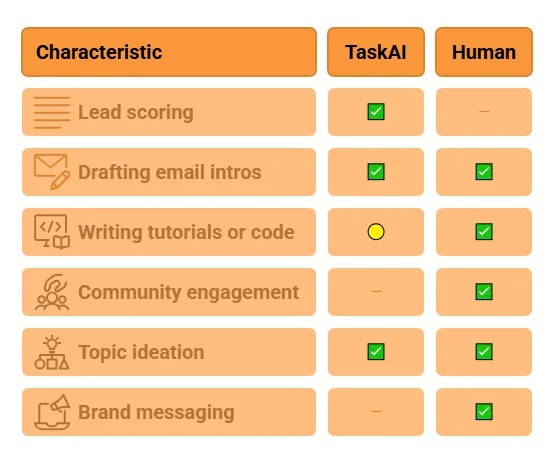 Lead Scoring
AI can take the lead here. It’s well-suited for analyzing behavior patterns, segmenting users, and scoring leads based on predefined criteria. This frees up your team to focus on strategy and follow-up, not spreadsheet diving.
Drafting Email Intros
Use AI to generate quick subject lines or opening sentences based on the content of the email.
But always have a human review and refine the tone, messaging, and context to ensure it's aligned with your brand and audience.
Writing Tutorials or Code Examples
Assist only: AI can help outline or suggest language, but human review is essential for credibility and accuracy.
AI can help draft a structure, generate basic code snippets, or assist with explanations.
However, only an experienced developer or subject-matter expert should write or validate the final content. Technical accuracy and credibility are essential, especially for a developer audience.
Community Engagement
AI shouldn’t lead here. Developers value authentic, human interaction, especially in forums, Discord groups, GitHub issues, or live events.
A real person should represent your voice and build trust with the community.
Topic Ideation
AI can scan trends, search data, or competitor content to suggest relevant topics quickly.
Human marketers should then filter those ideas based on strategy, business goals, and actual developer needs, ensuring that content is meaningful, not just keyword-friendly.
Brand Messaging
This is a human-only task. Your brand voice, positioning, and tone depend on context, empathy, and creativity, areas where AI still falls short.
Messaging should always be crafted and reviewed by people who understand your market, product, and users.
Use this as a guide to keep your content fast, accurate, and trustworthy especially when engaging developer audiences who value depth and authenticity. Let me know if you'd like this turned into a visual template or internal slide.
Final Thought
Even as AI becomes more powerful and integrated into marketing workflows, developer marketing remains grounded in one essential principle: trust. Developers are sharp, skeptical, and time-constrained. They don't just want answers, they want clarity, context, and confidence that what they’re reading is both accurate and useful.
That trust is earned through thoughtful content, peer-driven insights, and respectful communication, not shortcuts. These are areas where human marketers, writers, and subject-matter experts continue to play an irreplaceable role.
AI is an incredible enabler. It can streamline research, scale content operations, and surface patterns faster than any team. But it can’t replicate real experience, make strategic trade-offs, or speak with the voice of someone who’s solved the problem.
In developer marketing, that human touch is what transforms a good strategy into a great one. Keep using AI, but keep people at the center. That’s how you earn trust, drive impact, and build lasting connections with technical audiences.

 Enlear