Does AI-Written Technical Content Still Need Developer Review?
AI can speed up technical content creation, but developer review is still essential for accuracy, context, and real-world technical insight.
Enlear Team
October 2, 2026
5 min read
<%>
Developer Marketing
Does AI-Written Technical Content Still Need Developer Review?
Enlear
AI can now produce a technically convincing article in minutes. It can support technical content creation, from explaining APIs and security concepts to generating code examples and comparing architectures. The problem is no longer whether AI can write technical content. The real question is whether AI technical content can be trusted enough to represent a developer product accurately. In our experience, the answer is still no, at least not without review.
AI Can Produce Good Writing Without Producing Correct Technical Content
This is probably the most important distinction we have noticed. An AI-generated paragraph can sound completely reasonable while containing a small technical error. The terminology may be right. The explanation may flow well. Even the code can look believable. But a developer reading it may notice something different.
The API method might be deprecated. A configuration option might work differently in the latest version. An architectural explanation may simplify an important limitation. A security recommendation may be technically possible but unsafe in a real deployment.
That is why technical content accuracy cannot be judged only by how professional the writing sounds. AI is particularly good at producing plausible explanations. Technical reviewers need to determine whether those explanations actually match how the technology behaves.
Where We Find Developer Review Most Important
Not every paragraph needs an engineer to spend twenty minutes checking it. The level of developer review should depend on the technical risk of the content. We pay much closer attention when an article includes:
Code examples
API requests and responses
SDK behavior
Infrastructure configurations
Security recommendations
Architecture diagrams
Performance claims
Product capabilities
Version-specific instructions
Consider a simple API tutorial.
AI may generate a valid-looking request using an authentication method that the product no longer recommends. The example could technically work while still teaching developers the wrong implementation pattern. That kind of mistake is more damaging than a grammatical issue because developers may actually copy the example into their environment.
Product Knowledge Is Another Weak Point
There is also a difference between understanding a technology category and understanding a specific product. AI may know what observability, API security, or agentic coding generally means. That does not mean it understands exactly how a particular developer product works. We have seen drafts where the broad technical explanation was correct, but the product connection was slightly wrong.
A feature was described too broadly. Two related capabilities were treated as the same thing. A product benefit was stated as if it were a technical guarantee. These are small changes from a writing perspective, but they matter in developer marketing. Developers are usually quick to notice when marketing content does not match the documentation or actual product behavior. Once that happens, the problem is no longer just AI writing quality. It becomes a credibility issue.
Developer Review Does Not Mean Developers Need to Write Everything
This is where we think some technical content workflows become unnecessarily difficult. Asking engineers to write every article from a blank page is rarely the most efficient approach. Writing may not be their main responsibility, and technical experts often have limited time. A better workflow for us has been to separate writing from validation.
The writer can handle the structure, narrative, search intent, examples, and readability. AI can support research, outlining, summarization, and editing. Then a developer or subject matter expert reviews the areas where technical judgment is actually required. That review might involve questions such as:
Is this technically correct?
Would we actually recommend this implementation?
Does this explanation match how the product works?
Is the example realistic?
Are we ignoring an important limitation or edge case?
This makes AI content review much more focused. Developers are not being asked to become content writers. They are being asked to verify the parts where their expertise changes the quality of the article.
Code Examples Need More Than a Quick Read
Code is one area where we are especially careful. AI-generated code often looks clean enough to pass a casual review. The syntax may even be correct. But technically useful code needs another level of validation.
We need to ask whether it works with the stated library version, handles expected errors, follows current API conventions, uses sensible permissions, and reflects something we would actually want a reader to implement. This is particularly important in security, cloud infrastructure, authentication, and production engineering content. A code sample does not become trustworthy simply because it compiles. For important examples, running or testing the code is much stronger than checking whether it looks correct.
Architecture Content Has the Same Problem
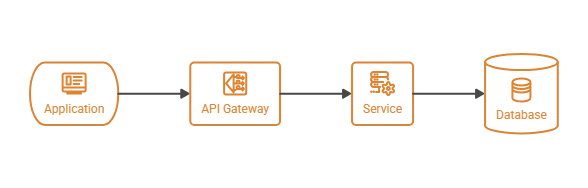
Architecture explanations can be harder to verify because there may be no obvious syntax error. AI can create a clean description such as:
The flow looks logical. But real systems often involve identity boundaries, asynchronous processing, caching, retries, queues, data access policies, and failure paths. Leaving those details out might be fine for a high-level introduction. It becomes a problem when the article starts making conclusions about performance, reliability, or security based on an oversimplified architecture.
This is another area where developer review adds something AI cannot reliably provide on its own: engineering judgment about what details matter.
What We Actually Use AI For
We have not stopped using AI for technical writing. The opposite is true. It can remove a lot of low-value work from the process. We use it effectively for tasks such as organizing research, creating rough structures, generating alternative explanations, reducing repetition, improving transitions, summarizing long technical references, and turning SME notes into an initial draft. The mistake is treating the generated output as the finished product.
Our workflow is closer to:
The developer review does not need to rewrite the whole article. Its purpose is to challenge the technical assumptions. That small difference makes AI much more useful.
AI Makes Technical Review More Important, Not Less
There is an interesting side effect of faster content generation. When producing an article required significant manual effort, publishing ten technical articles involved ten substantial writing processes. AI can now generate those drafts much faster. That increases output, but it can also increase the number of technical mistakes reaching the review stage. So the bottleneck moves. Writing becomes faster. Verification becomes more valuable.
For developer marketing, we think this is one of the biggest changes AI is creating in content operations. The competitive advantage is becoming less about who can generate the most content and more about who can maintain technical credibility while using AI to increase production speed.
Conclusion
AI can speed up technical content creation, but generation and validation are different jobs. AI works best for drafting, while developers review code, APIs, architecture, security guidance, and product claims. The goal is not to remove developers from the process but to use their time where it matters most: making technical content trustworthy.
Explore the problem that higher output does not automatically make technical content more useful or convincing. From what we have seen, publishing more without improving depth, accuracy, or relevance can weaken developer marketing rather than strengthen it.
AI can produce a polished technical article in minutes, but it may still include inaccurate explanations, unrealistic examples, or missing limitations.
Learn how paid campaigns support developer marketing, from targeting technical audiences and building trust to measuring product adoption and conversions.

 Enlear