How one AI company transformed technical expertise into product-market authority as buyer expectations evolved
Overview
More than 70,000 AI companies are estimated to be operating globally by 2025, with thousands of new startups entering the market each year. As investment in generative AI, infrastructure, and enterprise applications continues to accelerate , categories evolve quickly, buyer expectations shift, and the language customers use to describe their challenges changes just as fast. In markets moving at this pace, product marketing rarely succeeds with a single positioning statement or static messaging framework.
This success story highlights how one AI company evolved its content marketing strategy as the market matured, achieving stronger growth at each stage of its journey. Sustainable growth in AI markets rarely comes from a single campaign, channel, or message. Instead, it comes from recognizing how buyer understanding evolves and adapting marketing efforts accordingly.
Rather than focusing solely on visibility, the company invested in understanding how buyers evaluated AI products, what information they needed at different stages of adoption, and how their expectations changed over time. As the market matured, its content marketing strategy evolved from educating buyers about the problem, to helping them evaluate solutions, to demonstrating measurable business value. Each stage built on the authority and trust established in the previous one, contributing to increased visibility, stronger engagement, and accelerated growth over time.
This journey highlights an important lesson for AI and developer-tool companies:
Growth accelerates when product marketing evolves alongside buyer understanding and market maturity.
The Challenge: Strong Product Expertise in an Emerging AI Category
The company entered a market where demand was growing, but buyer understanding remained fragmented.
Organizations were experiencing challenges related to AI reliability, evaluation, monitoring, governance, security, and performance. However, there was little consistency in how those challenges were described or how buyers evaluated potential solutions.
Different audiences used different terminology:
While the underlying challenges were often connected, buyers approached them from different perspectives depending on their role, responsibilities, and level of technical expertise.
As a result, the company faced a common AI product marketing challenge:
The market recognized the symptoms, but buyers lacked a clear framework for understanding the category and evaluating products. This made it difficult to rely solely on feature-focused messaging. Before buyers could compare solutions, they first needed clarity around the problem and the value of solving it.
Key Insight: Effective AI product marketing begins by helping buyers understand the problem before asking them to evaluate the product.
Phase 1: Building Product Category Understanding
The company's first objective was to help buyers understand the category and the challenges it addressed.
At this stage, many prospects were still researching foundational questions:
-
What challenges are emerging with AI adoption?
-
Why do reliability and evaluation matter?
-
What risks should organizations be aware of?
-
How should teams assess AI performance?
-
What capabilities should they look for in a solution?
The product marketing strategy focused on educational content and category-level messaging designed to answer these questions. Rather than leading with product features, the company concentrated on helping buyers understand the broader landscape.
This approach helped:
-
Create awareness around emerging AI challenges
-
Build credibility through technical expertise
-
Increase discoverability across related search topics
-
Establish the company as a trusted source of guidance
While growth during this phase was gradual, it laid the foundation for future momentum. The company was no longer simply promoting a product, it was helping buyers understand why the category mattered.
Success Factor: Strong product marketing starts by creating context before communicating differentiation.
Phase 2: Helping Buyers Evaluate Solutions with Confidence
As awareness increased, the market entered a new stage. More organizations recognized the importance of AI reliability, governance, and operational performance. However, understanding that a problem exists is different from knowing how to evaluate available solutions. Buyers now faced a different challenge: Which approach is right for their organization, and how should they compare options? This shift required a more sophisticated product marketing strategy.
The company expanded its content and messaging to focus on:
The goal was no longer just awareness. The goal was buyer confidence. Technical audiences needed depth and accuracy. Business stakeholders needed practical explanations that connected product capabilities to organizational priorities. By bridging those perspectives, the company helped buyers navigate an increasingly complex market.
This phase strengthened the company's position as a trusted authority and expanded its visibility across a broader set of buyer journeys.
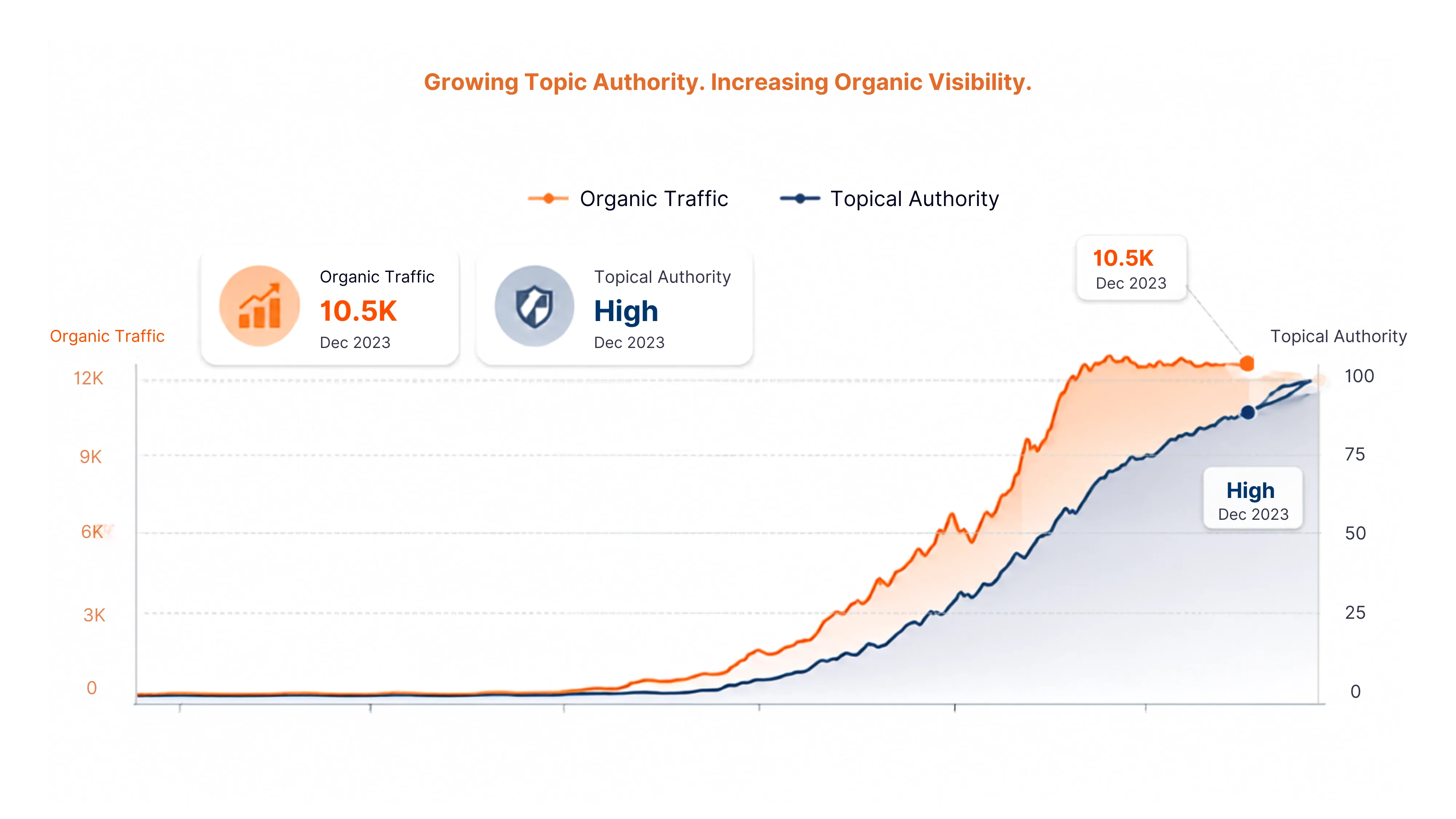 Growth in topical authority and organic visibility
Success Factor: Product marketing becomes more influential when it helps buyers make decisions, not just discover products.
Phase 3: Connecting Product Value to Business Outcomes
As AI adoption matured, buyer priorities evolved once again. Organizations were no longer asking whether AI should be adopted. Many had already begun implementation efforts and were looking for ways to measure success. The conversation shifted toward outcomes.
Leadership teams wanted answers to questions such as:
-
How can AI productivity be measured?
-
What defines successful adoption?
-
Which metrics matter most?
-
How can organizations demonstrate ROI?
-
How should AI investments be evaluated over time?
This represented an important transition. Technical credibility remained essential, but buyers increasingly expected product capabilities to be connected to measurable business impact. The company's product marketing strategy evolved accordingly. Messaging began addressing both technical implementation and business value, helping stakeholders understand how product capabilities could translate into operational and organizational outcomes. Because the company had already established authority during earlier phases, it was well positioned to participate in these higher-level conversations.
Its expertise was already trusted. Its perspective was already discoverable. Its content ecosystem already covered the foundational topics buyers needed to understand before evaluating outcomes. This allowed new messaging and content to build upon existing authority rather than starting from scratch.
Success Factor: Outcome-driven product marketing is most effective when it is supported by established technical credibility.
The Strategic Shift: Aligning Product Marketing with Market Maturity
One of the most important aspects of this journey is that the company's growth was driven by alignment with market maturity. The company did not repeatedly reinvent its positioning. Instead, it adapted its product marketing focus as buyer needs evolved.
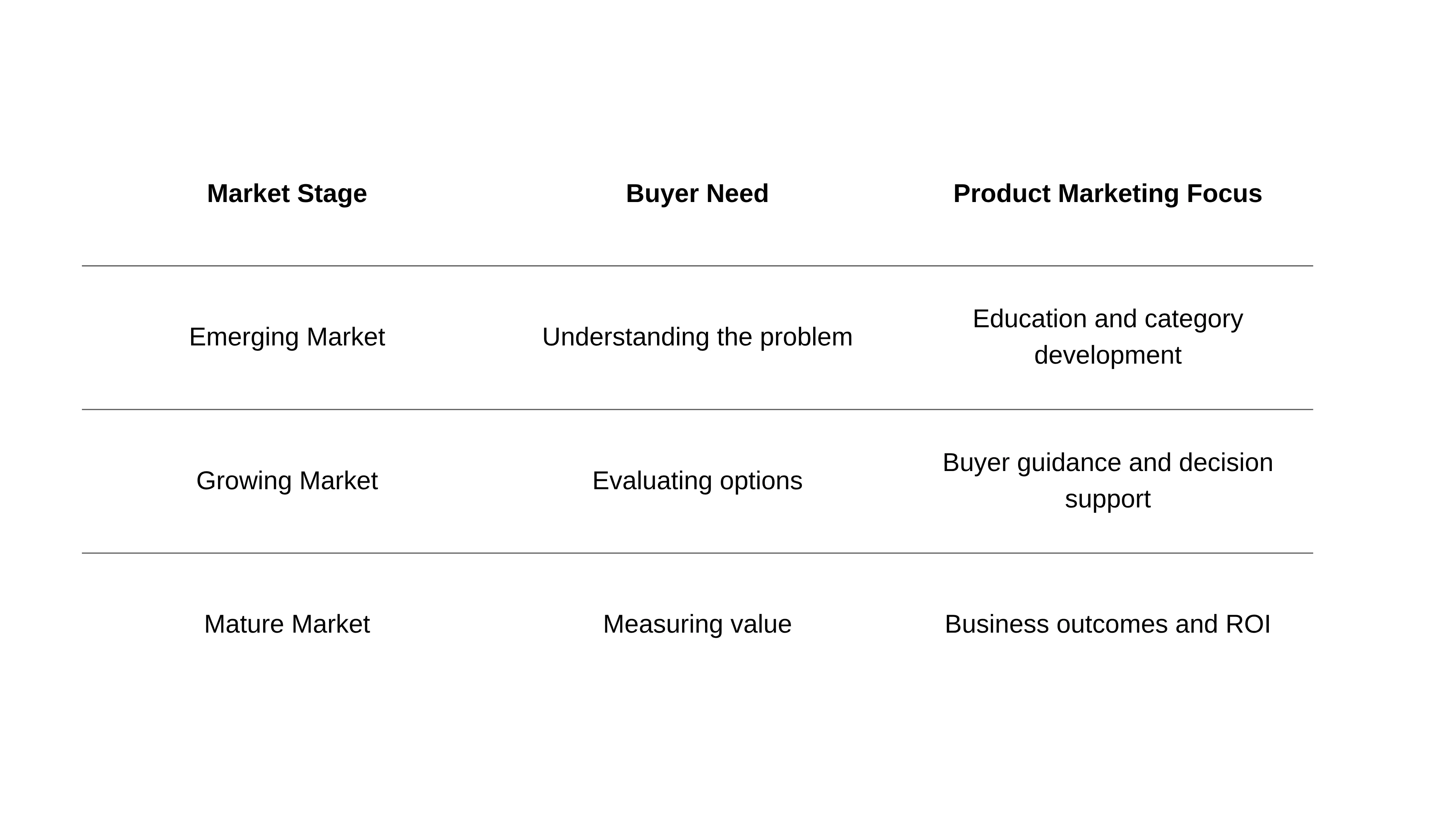 Market Maturity Framework
This progression reflects a broader reality for AI and developer-tool companies: The questions buyers ask today are rarely the same questions they ask a year later.
Organizations that recognize these shifts early are often better positioned to build authority, improve product adoption, and sustain growth.
Key Insight: Effective product marketing is not only about communicating value it is about aligning that value with evolving buyer expectations.
Why This Matters for AI and Developer-Tool Companies
Technical products often involve multiple stakeholders. A developer may discover a solution through a technical challenge. A security or operations team may evaluate it through risk and governance requirements. Executives may focus on productivity, efficiency, and return on investment.
Product marketers must create a narrative that connects all of these perspectives. This requires more than content production. It requires a structured approach to understanding buyers and market dynamics.
Successful organizations continuously evaluate:
-
How buyers describe their challenges
-
Which topics are gaining importance
-
Where confusion still exists
-
What information supports evaluation and adoption
-
How product capabilities connect to business outcomes
When executed effectively, product marketing becomes more than a function that supports launches.It becomes a strategic asset that strengthens market position, buyer trust, and long-term growth.
Key Insight: In technical markets, trust is often established long before a buyer engages with sales.
Results and Key Takeaways
The company's journey followed a clear progression:
-
Help buyers understand the problem.
-
Help buyers evaluate solutions.
-
Help organizations connect product capabilities to business value.
Each phase built upon the previous one. Educational content established relevance. Evaluation-focused messaging built trust. Outcome-focused product marketing expanded influence across the buying committee. The result was a stronger market position, broader discoverability, and a product marketing strategy aligned with how buyers actually make decisions.
Final Takeaway
For AI and developer-tool companies, growth is rarely the result of simply publishing more content or increasing promotional activity. The companies that build lasting authority are often those that understand how their buyers are evolving and adapt their product marketing accordingly.
When expertise becomes discoverable, buyers begin to pay attention. When expertise becomes understandable, buyers begin to trust. When product value becomes connected to measurable outcomes, growth becomes easier to sustain.
That is how product marketing evolves from messaging into strategic direction.
 Enlear