Growing Visibility in a Competitive Developer Market
DynamoDB is Amazon Web Services’ fully managed NoSQL database, designed to deliver fast performance and virtually unlimited scalability for modern applications. It has become a popular choice for developers building serverless applications and cloud-native systems on AWS.
Most developers interact with DynamoDB through the AWS Console, which can become cumbersome when managing data, writing queries, or troubleshooting complex workflows.
Dynobase was created to make that experience easier. As a desktop GUI client for DynamoDB, it provides a more intuitive way to browse and edit data, build queries, visualize tables, and manage databases efficiently.
Turning Developer Searches Into Growth
As DynamoDB adoption continued to grow, so did the number of developers searching for answers online. Queries around data modeling, query optimization, indexing strategies, performance tuning, troubleshooting, and AWS development workflows generated consistent search demand from developers looking for practical solutions.
Recognizing this opportunity, Dynobase formulated a content marketing strategy focused on capturing these high-intent technical searches. Instead of competing only through product visibility, the company aimed to become a trusted educational resource for DynamoDB users. By identifying common developer questions, targeting relevant SEO keywords, and creating in-depth content around real-world DynamoDB challenges, Dynobase could reach potential users long before they started evaluating tools.
Reaching Developers Where They Search
Many developers who could benefit from a tool like Dynobase did not yet know it existed. Instead, they were searching for DynamoDB best practices, query optimization techniques, data modeling advice, AWS database tutorials, and troubleshooting guides. In many cases, their default destination was AWS documentation, community forums, or the DynamoDB console itself.
The conversations were already happening in search. Dynobase simply needed to become part of those conversations.
Content Marketing as the Growth Engine
To do that, Dynobase leaned into content marketing. Instead of focusing only on product-led pages, it began building educational content around the exact problems DynamoDB developers were trying to solve.
By creating practical blogs, tutorials, FAQs, and technical guides, Dynobase positioned itself not only as a useful software product but also as a trusted learning resource for DynamoDB users.
The strategy was rooted in a simple observation: developers rarely search for software first. They search for solutions to problems.
A developer struggling with DynamoDB query performance is more likely to search for “DynamoDB query optimization” than “DynamoDB GUI tool.” Someone learning how to structure a table may search for “DynamoDB data modeling best practices.” Others may be looking for guidance on secondary indexes, pagination, scans versus queries, or common DynamoDB errors.
Dynobase built content around these real-world use cases.
Over time, the site expanded into a comprehensive knowledge hub covering topics such as:
-
DynamoDB data modeling and schema design
-
Query and scan optimization techniques
-
Global Secondary Indexes (GSIs) and Local Secondary Indexes (LSIs)
-
DynamoDB pricing and cost optimization
-
AWS Lambda and DynamoDB integrations
-
DynamoDB troubleshooting and debugging
-
NoSQL database concepts and best practices
-
Practical AWS development workflows
The content was designed to be highly actionable rather than purely theoretical. Articles included code examples, implementation guidance, explanations of AWS concepts, and step-by-step tutorials that developers could immediately apply to their projects.
For example, Dynobase published educational resources covering topics such as DynamoDB Query operations, Scan operations, pagination, filtering, indexing strategies, and common DynamoDB errors. The site also developed extensive documentation and learning resources around DynamoDB expressions, update operations, and performance optimization techniques, topics that developers frequently search for while building production applications.
This approach allowed Dynobase to reach developers at multiple stages of their journey:
-
Developers learning DynamoDB fundamentals
-
Engineers troubleshooting production issues
-
Teams optimizing performance and scalability
-
AWS users evaluating tools to improve their workflows
Rather than pushing product messaging at every opportunity, the content focused on helping users succeed first. As trust grew, developers naturally discovered Dynobase's product offerings while researching solutions to their database challenges.
The results began to compound over time. Each new article created another entry point into the website. Each topic cluster strengthened Dynobase's authority around DynamoDB. As more content ranked for relevant searches, organic visibility expanded across hundreds of developer-focused keywords.
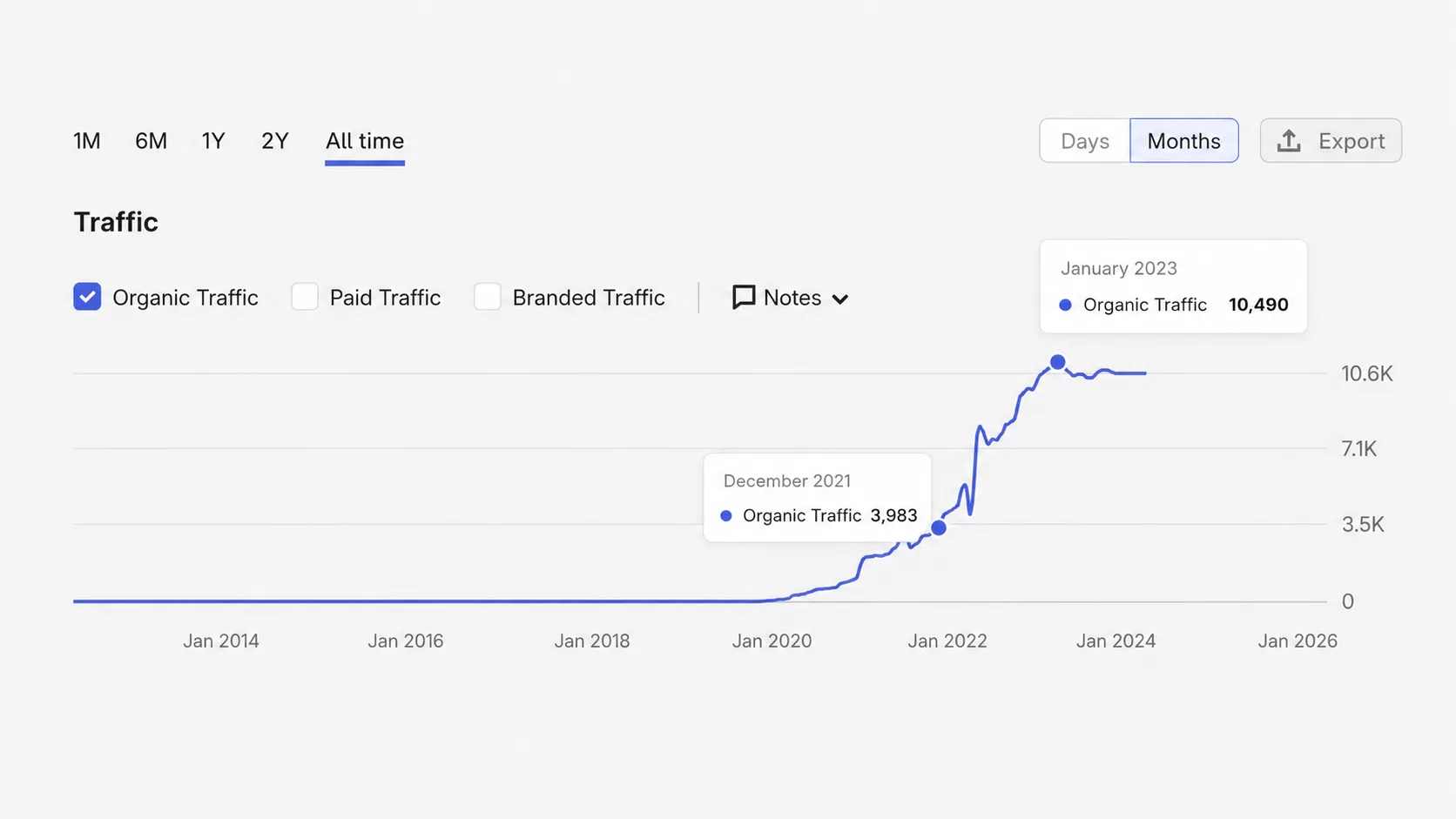 Source: Dynobase’s organic traffic growth by Semrush
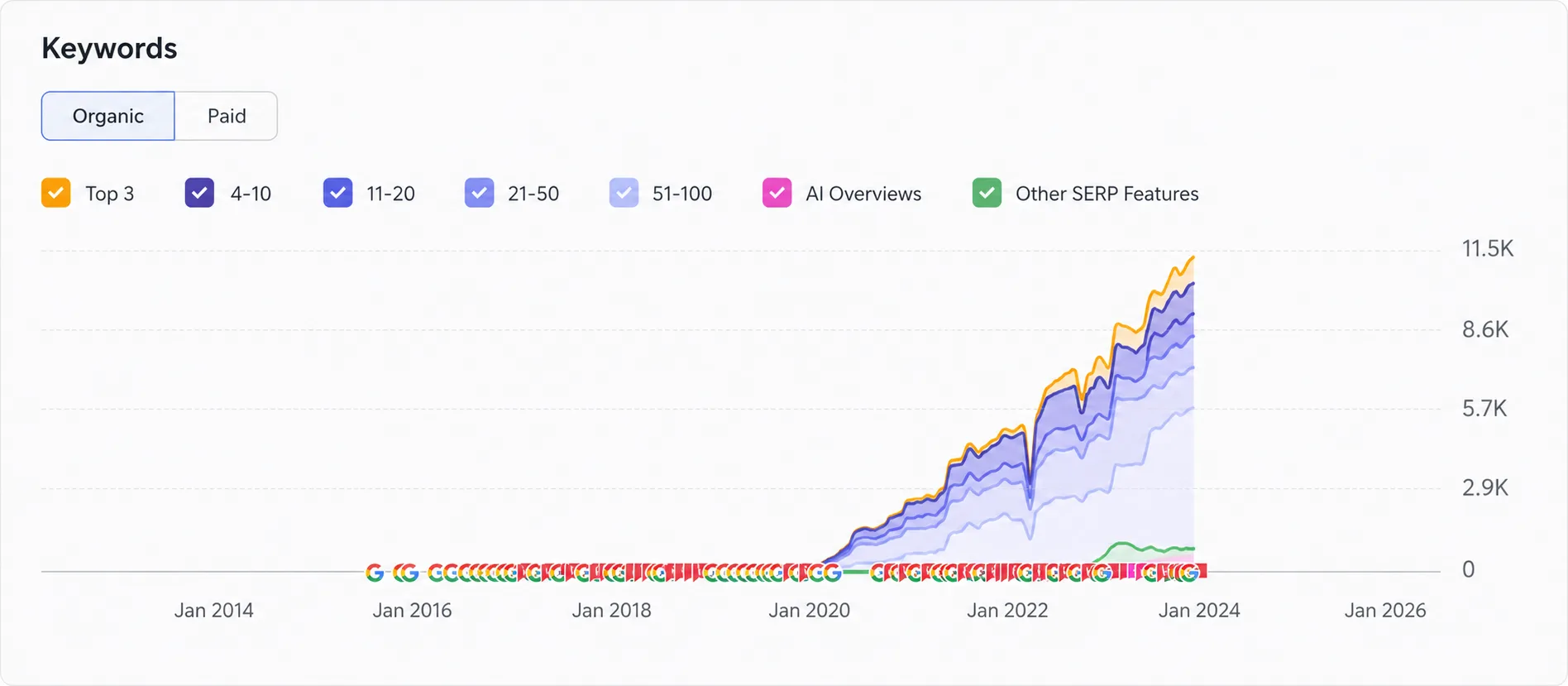 Source: Dynobase’s Organic keyword growth by Semrush
What started as a content initiative evolved into a sustainable acquisition channel. Instead of relying solely on brand awareness or paid acquisition, Dynobase built a system that continuously attracted developers actively searching for DynamoDB expertise.
That shift became the foundation for its organic growth.
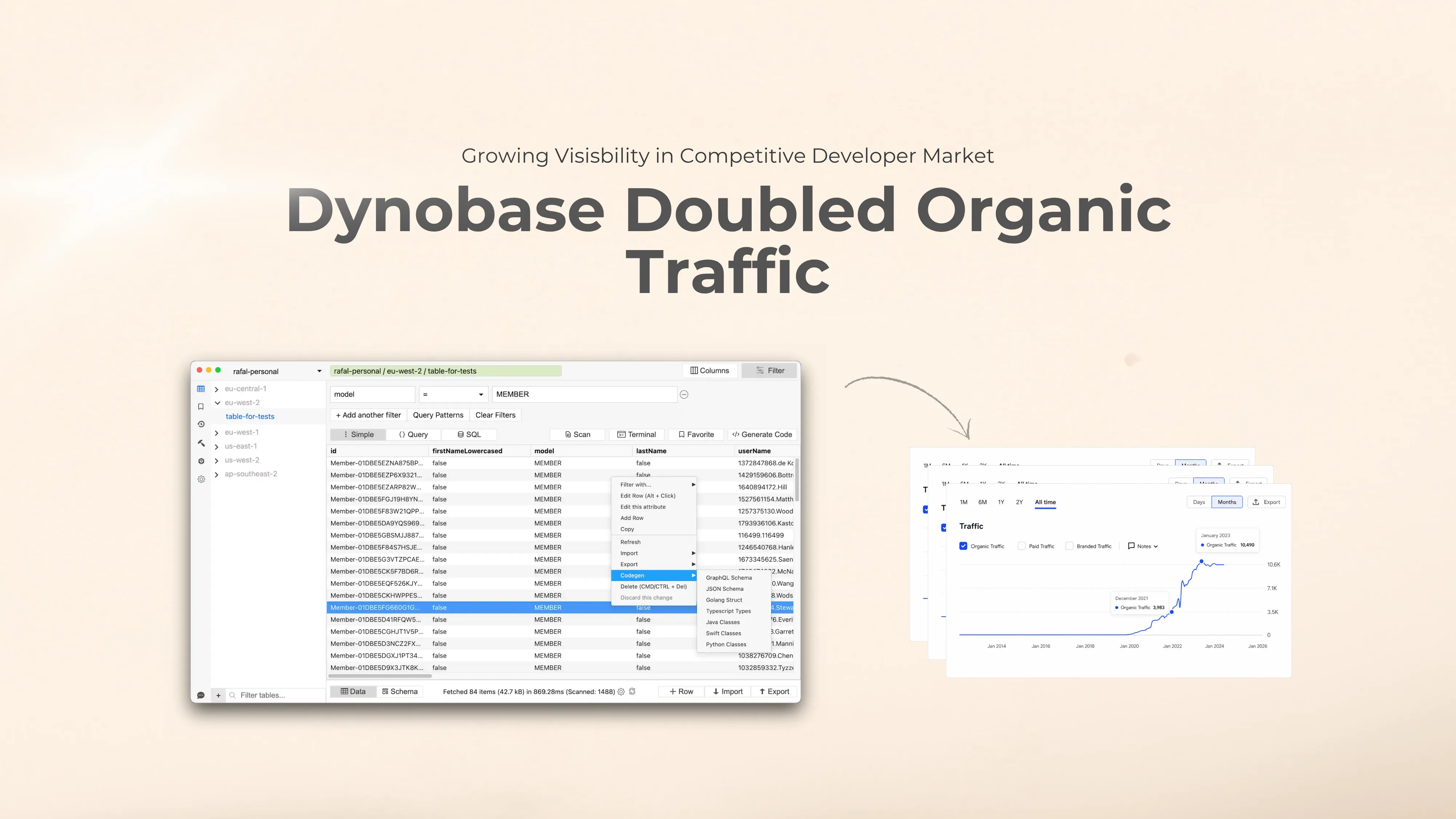
 Enlear