Turning a Single Piece of Content Into a Developer Grow
But with one useful piece of content that meets the developer at the exact moment they need help.
This success story shows how one developer-tool company used a single high-value technical guide to move from low visibility to trusted market presence. The company did not win developers by shouting louder. It won them by solving a real problem better than anyone else.
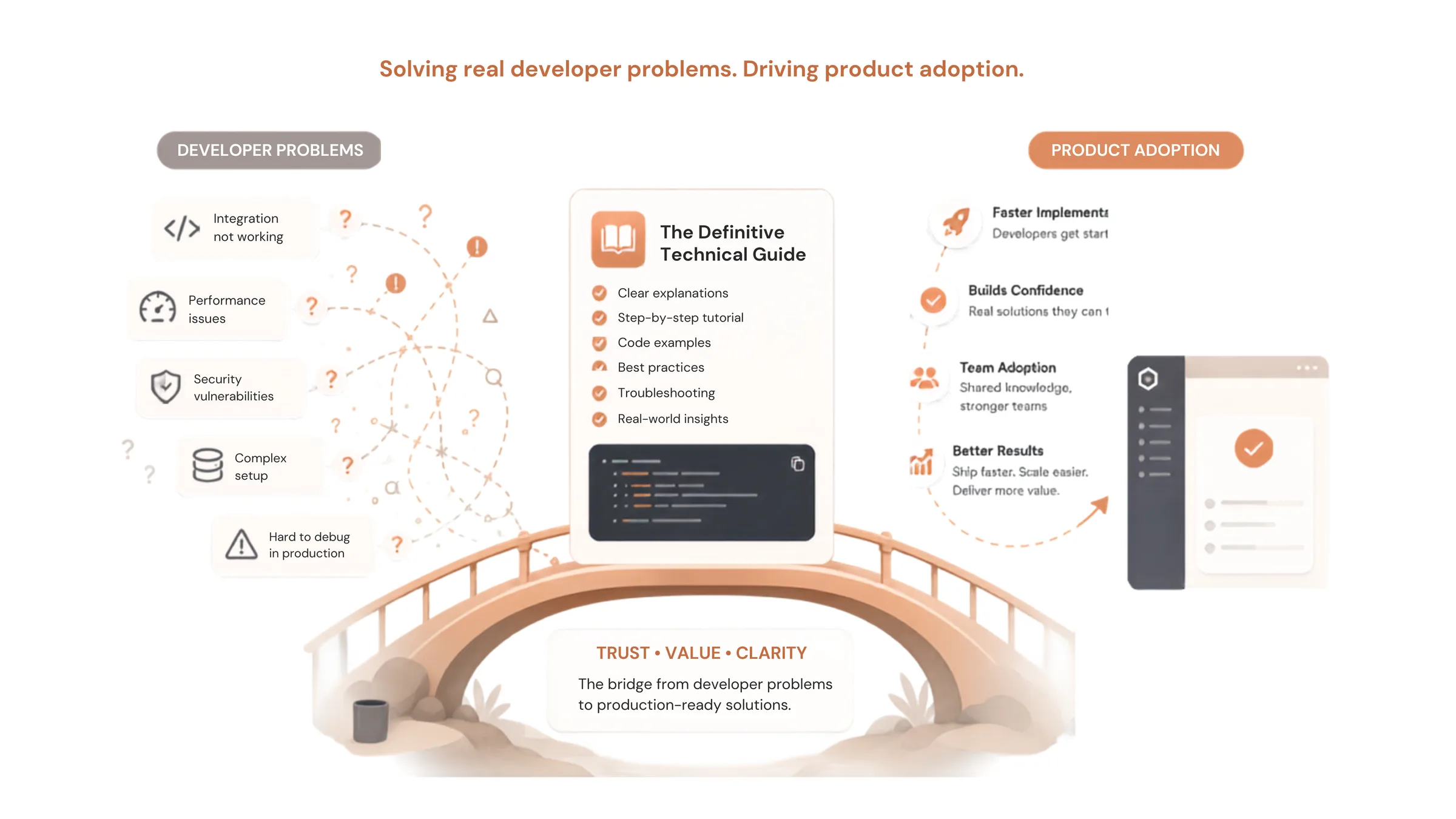 ## The Challenge: Developers Had the Problem, But Not the Language
The company had built a useful product for engineering teams. It helped developers simplify a painful part of their workflow, reduce manual effort, and avoid common production mistakes.
But there was a problem. The market was crowded. Many tools were making similar claims. Everyone promised faster workflows, better automation, smoother integration, and fewer errors. From the outside, most products looked almost the same. Developers were not searching for the company’s product category. They were searching for practical answers.
They searched things like:
- How to fix a broken workflow
- Why an integration was failing
- How to structure a scalable setup
- What best practices to follow
- How to avoid common mistakes in production
The company realized something important:
Developers were not ignoring the product because they did not care. They simply had not connected their daily pain to the company’s solution yet.
The Insight: Win the Problem Before You Win the Market
Instead of creating more product pages, the team studied developer behavior. They looked at support questions, community discussions, search queries, GitHub issues, forum threads, and conversations from sales calls. A pattern started to appear. Developers were repeatedly struggling with one specific workflow. It was not the biggest topic in the market. It was not the flashiest trend. But it was painful, common, and deeply connected to what the product solved.
That became the strategic opportunity. The company decided to create one definitive technical guide around that problem. Not a short SEO blog. Not a generic thought leadership article. A real, practical, step-by-step resource that a developer could use immediately.
The goal was simple:
Become the most helpful answer for one important developer problem.
The Piece: A Guide Built Like a Product
The team treated the content piece like a product feature. It had a clear user problem. It had a target reader. It had a success outcome. It had examples, edge cases, and practical implementation steps.
The guide included:
- A clear explanation of the problem
- A simple mental model developers could remember
- Step-by-step implementation guidance
- Code examples
- Common mistakes and how to avoid them
- Troubleshooting advice
- Performance and security considerations
- A short section showing where the company’s product could simplify the workflow
The product was present, but it was not forced. The guide helped first. That mattered. Developers could use the article even if they never signed up. This made the content feel trustworthy. It showed technical confidence instead of marketing pressure.
How the Content Built Trust
Once published, the guide started reaching developers through search. At first, traffic was small. A few developers found it through long-tail queries. Some copied code snippets. Some shared it internally. A few bookmarked it. Then something started to happen. The guide began appearing in Slack threads, Reddit comments, GitHub discussions, and internal engineering docs. Developers referenced it because it solved the problem clearly. The company did not need to interrupt the conversation. The content entered the conversation naturally.
Over time, the guide became more than an article. It became a trust signal. Developers who discovered the company through the guide were not cold visitors. They already had proof that the company understood their problem. By the time they reached the product page, the company had already created value.
From One Guide to a Content System
The success of the first guide changed the company’s marketing approach. The team realized that developer growth did not come from publishing random content. It came from building around real technical problems. So they expanded the original guide into a topic cluster.
They created supporting content around:
- Beginner explanations
- Advanced implementation patterns
- Comparison guides
- Troubleshooting pages
- Integration tutorials
- Use-case-specific workflows
- Documentation improvements
- Short practical examples for common errors
Each new piece connected back to the original guide. This gave developers multiple entry points into the company’s ecosystem. Some arrived while learning the basics. Others arrived while solving production issues. Others came while comparing tools. The original guide became the center of a larger authority system.
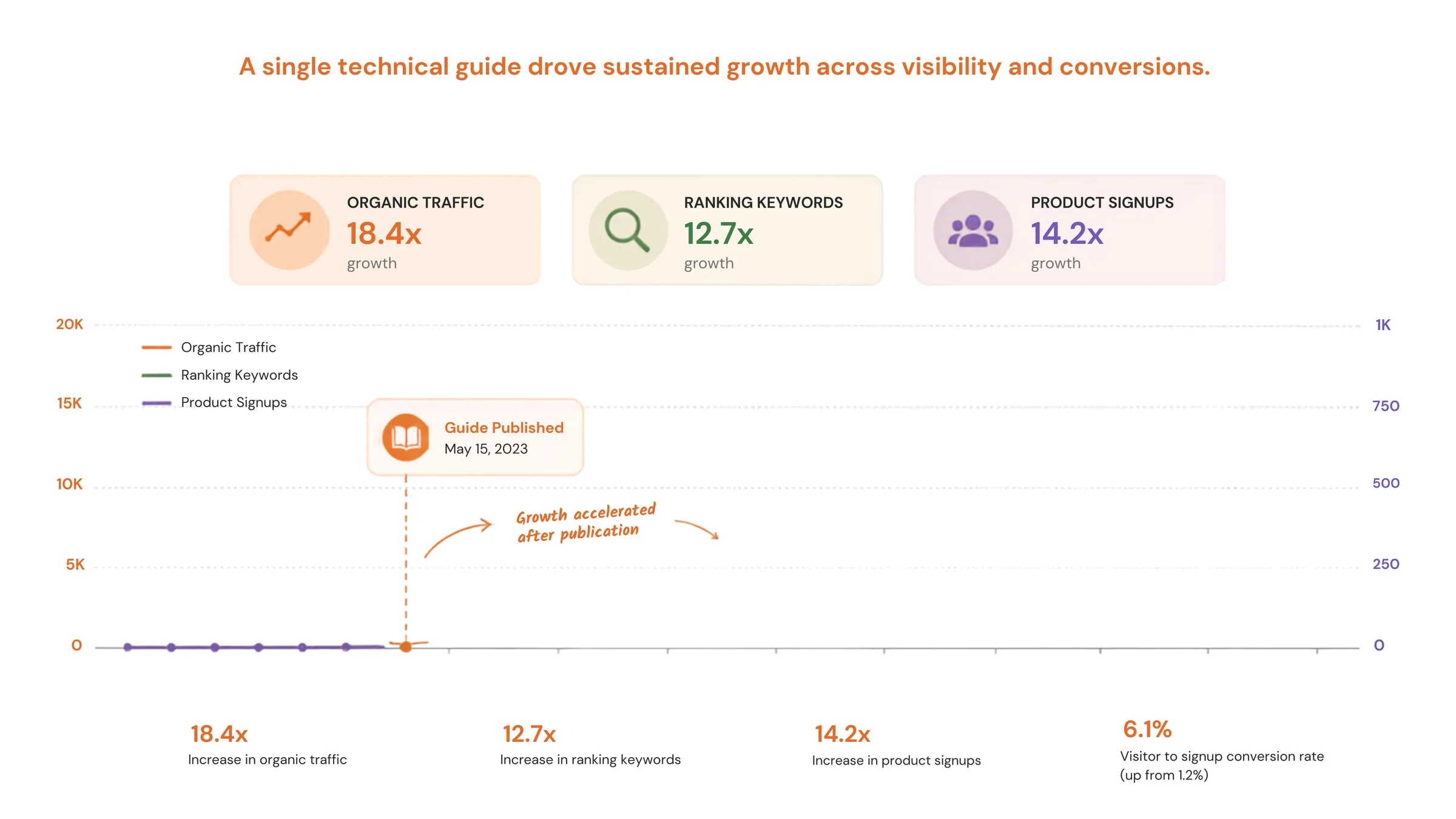
The Results: Visibility Turned Into Market Trust
The company’s growth did not happen overnight. But it compounded. The guide began ranking for high-intent developer searches. Supporting articles expanded keyword coverage. More developers reached the site through practical technical questions. Product signups improved because visitors already understood the value before they saw the pricing page.
The most important result was not just more traffic. It was better traffic.
The company attracted developers who were already experiencing the problem the product solved. These visitors spent more time on the site, explored related resources, and were more likely to try the product. The company had turned one useful piece of content into a growth engine.
 ## Why It Worked
The strategy worked because it respected how developers make decisions. Developers rarely trust vague promises. They trust useful proof. A strong technical content piece can create that proof before a demo, before a sales call, and before a signup.
The guide worked because it was:
- Specific enough to match a real developer problem
- Practical enough to be immediately useful
- Technical enough to earn credibility
- Clear enough for both beginners and experienced engineers
- Connected enough to show where the product fit naturally
It did not try to win the entire market at once. It won one problem. Then another. Then another. That is how developer trust grows.
Key Takeaway
Winning the developer market does not always start with a huge campaign.Sometimes it starts with one excellent piece of content. One guide that explains the problem clearly. One tutorial that saves a developer an hour. One troubleshooting page that fixes a production issue. One resource that makes a developer think, “These people understand what I’m dealing with.”
That moment is powerful. Because in developer marketing, trust is not built by saying the product is useful. Trust is built by being useful first.
Final Thought
The company did not win the developer market by creating more noise. It won by creating one piece of content that became genuinely helpful. That piece gave developers clarity. It gave the company visibility. And over time, it gave the product a stronger position in the market.

 Enlear